|
 |
 |
|
|
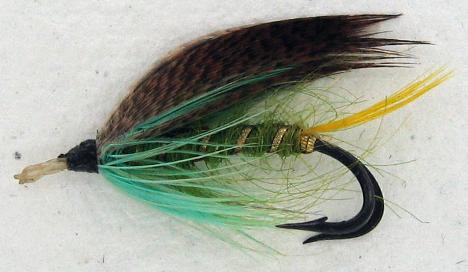
On this page Cabbage, Captain Walton, Catcher, Childers, Claret Jock, Clark, Clunie, Colonel, Colonel Keane - Please scroll down to view Cabbage
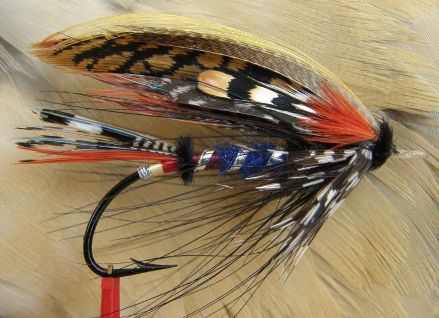
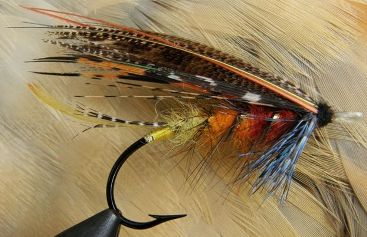
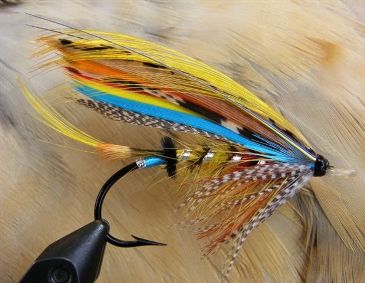
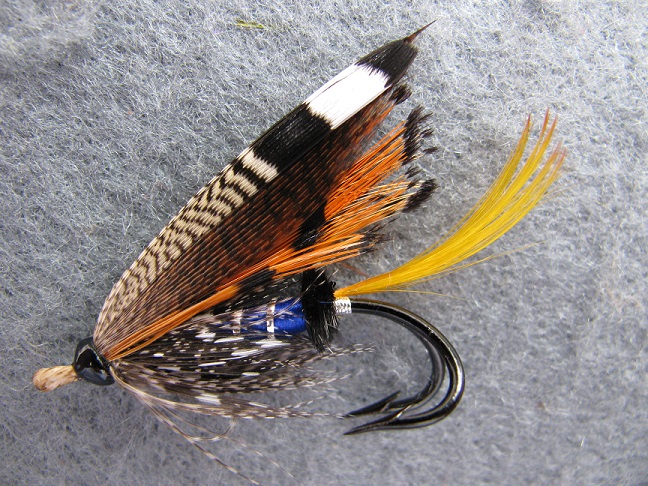
Vintage Captain Walton Kelson – The Salmon Fly, 1885 Tag: Silver twist, cream silk, and crimson silk. Tail: Ibis, powdered blue macaw, tippet, and peacock wing, in strands; with two (shorter) narrow strips of summer duck. Butt: Black herl. Body: claret silk (two turns), dark blue seal’s fur, and black seal’s fur, in equal divisions. Hackle: Black heron from blue seal’s fur. Throat: Gallina. Ribs: Silver tinsel and silver twist. Wings: Peacock wing dyed claret, powdered blue macaw, red macaw, and teal, in strands; golden pheasant tail, gallina, mallard, and a topping. Sides: Jungle. Cheeks: Indian crow. Head: Black herl. Used with success on the Kelson attributes the pattern to himself.
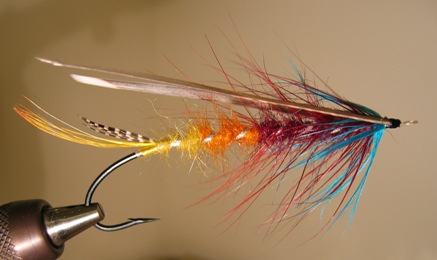
Catcher
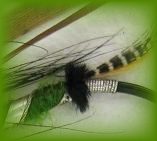
Sorry no vintage example so this is one I have tied up
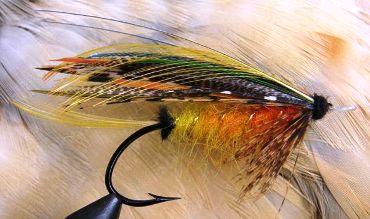
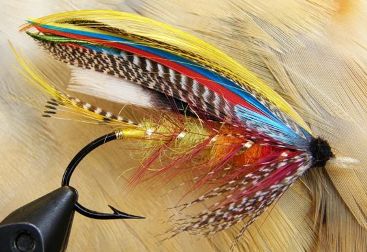
WM Tag: Silver thread and yellow silk floss. Tail: A topping and sprig of pintail. Body: The first half yellow and orange mohair, equal parts; the second half claret mohair, none of the body picked out. Ribbed: Medium broad embossed silver tinsel, six turns. Hackle: Claret-dyed cock hackle, wound over the claret mohair only. Shoulder: Greenish-blue cock hackle of long fibber. Wings: Strips of cream-coloured turkey, inclining to a lighter shade at the tip. Cheeks: Blue chatterer. Head: Black. Mr. George Smith, Tackle Merchant, Ballater, has a splendid stock of these patterns, most of which are proved killer on all reaches above, and a good many reached below, that place.
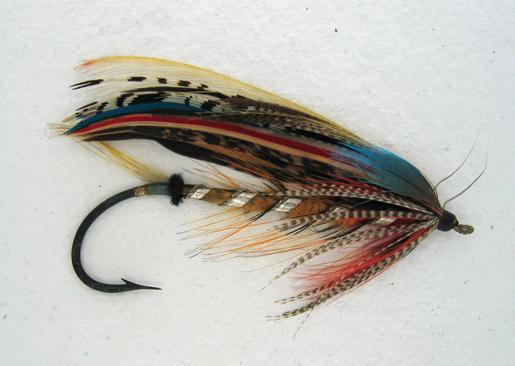
Childers
Vintage
A Childers tied in "Jones of Norway" style by North England's Dave Carne
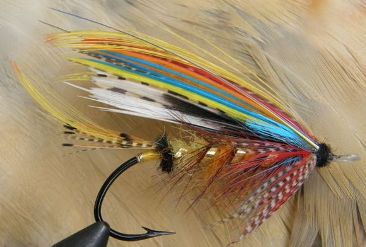
Another Tolfrey (Jones of Norway) Childers by Bob Fransden Jones's Guide to Tail: Golden pheasant and teal Tag: Gold twist and yellow silk Body: In patches of yellow, orange and red pig's wool, up to the shoulder. Rib: Gold tinsel Legs: Plain black or red hackle Throat: Jays hackle Wing: (Mixed) mallard, teal, guinea-hen, bustard, green parrot, golden pheasants tail, peacock and tail of a black cockatoo. Horns: Black and red macaw. Head: Black
A Wade Childers by Bob Halcyon – Henry Wade – 1861 Wings: Mixed wings, composed of a pair of golden pheasant’s crest and macaw slips, &c, &c Body: Yellow, resolving into orange in the upper part, made roughish. Rib: Gold thread. Hackle: Ptarmigan feather. Tail: Golden pheasant’ crest feather below ostrich’s herl.
A 'Francis Francis' Childers by Bob
Francis Francis - A Book on Angling - 1867
The Childers (Farlow's)
This is anothoer excellent general fly. It is a slaughterer on the Thurso, the Naverm the Helmsdale, and the Brora
Tag: Gold twist and golden coloured floss Tail: A topping, some teal, and tippet Body: Yellow, orange and dark red (somewhat of a lake) pig's wool Rib: Broad gold tinsel Hackle: Dark red claret and light blue on the shoulder Wing: A good lump of whiteish tipped dark turkey, and strips of bustard, and gold pheasant over it, mixed with slices of blue, pale red, orange, and yellow swan. Head: Black A Murdoch Childers by Bob William Murdoch Description for a 4/0 iron:- Tag: Silver twist with light blue floss. Tail: A topping, scarlet ibis, and green parrot (a sprig of each), and unbarred summer duck. Butt: Black ostrich. Body: Tree turns bright yellow floss, the remainder of bright yellow seal’s fur, except three turns of scarlet seal’s fur at shoulder – all the fur picked out a little. Ribbed: Silver tinsel and silver cord. Hackle: Yellow, with black centre from floss joint – the yellow to match the shade of yellow in the body of the fly; a scarlet ibis hackle at shoulder, and teal at throat to finish with. Wing: Under – fibbers of tippet, and bustard, pheasant’s tail, blue, red, and yellow swan; over – brown mallard, teal, summer duck, guinea fowl, and a topping all over. Cheeks: Chatterer. Horns: Blue Macaw. Head: Black Wool. A first rate killer on the Thurso and Loch More, and one of the best of the Standard patterns of Scotch salmon flies. Pattern from Mr. Dunbar (tackle maker in Oban).
Kelson – Land & Water Cards Towards the end of the season 1869 there was a regular run made upon “Childers.” From the The “Childers” is one of those flies that shows advantageously in thick water as well as in clear. It is well to remark that “Childers”, like nearly all flies with so little variety of colour in the body, is not an appropriate pattern made extravagantly large. But wherever it may be I have invariably found it most serviceable, notwithstanding the diminutive hooks on which it has frequently to be dressed. “Childers,” one of our oldest standard patterns, is made as follows:- Tag: Silver twist and light blue silk. Tail: A topping; blue and red macaw, and pintail. Butt: Black herl. Body: Two turns of light yellow silk, and the rest seal’s fur, leaving space at the throat for two turns of scarlet seal’s fur. Ribs: Silver lace and silver tinsel (only tinsel for small patterns). Hackle: A white furnace hackle dyed light yellow (most people prefer the white coch-y-bonddu dyed light yellow). Throat: Scarlet hackle and pintail respectively. Wings: Grey mallard, golden pheasant tippet and tail, gallina, bustard, brown mottled turkey, red macaw, summer duck, powdered blue macaw and brown mallard, with a topping above. Horns: Blue macaw. Head: Black herl.
A 'Kelson' Childers by Bob Kelson – The Salmon Fly, 1885 Tag: Silver twist and light blue silk. Tail: Topping; strands of red, and powdered blue macaw, and pintail. Butt: Black herl. Body: Two turns of light yellow silk, followed by light yellow seal’s fur, and three turns red seal’s fur at throat. Ribs: Silver lace and silver tinsel (oval). Hackle: White furnace hackle, dyed light yellow. Throat: A red hackle and widgeon. Wings: Strands of tippet, and tail of the golden pheasant; brown mottled turkey, Cheeks: Chatterer. Horns: Blue macaw. Head: Black herl. One of the best standard patterns. Kelson attributes the pattern to Colonel Childers.
A 'Pryce-Tannat' Childers by Bob
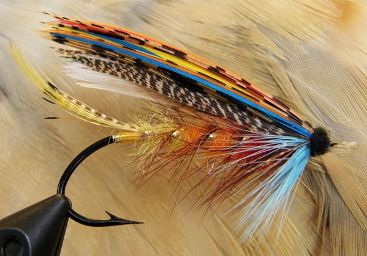
Pryce-Tannatt - How to Dress Salmon Flies, 1914 Tag: Silver thread and pale blue floss. Tail: A topping and Indian crow. Butt: Black herl. Body: Golden yellow floss, orange and fiery brown seal’s fur in equal sections. Ribs: Flat silver twist. Hackle: A badger hackle dyed lemon. Throat: Golden pheasant breast feather, followed by widgeon. Wings: Mixed - a pair of golden pheasant breast feathers (back to back); “married” strands of scarlet, blue, orange and yellow swan, bustard, florican, golden pheasant tail, cinnamon and mottled grey turkey tail. Sides: Barred summer duck strips. Cheeks: Blue chatterer; a topping over all. Horns: Blue and yellow macaw. Hook: 1¼ to 3 inches. Hardy – Salmon Fishing, 1907 Tag: Silver tinsel and light blue floss. Tail: Topping; red and blue macaw; pintail. Butt: Black herl. Body: Two turns of light yellow floss, followed by light yellow seal’s fur, and three turns red seal’s fur at throat. Ribs: Silver lace and silver tinsel. Hackle: White furnace hackle, dyed light yellow. Throat: A red hackle and widgeon. Wings: Strands of tippet, and tail of the golden pheasant; brown mottled turkey, Cheeks: Chatterer. Horns: Blue macaw. Head: Black.
Childers from a Megan Boyd pattern
The Claret Jock
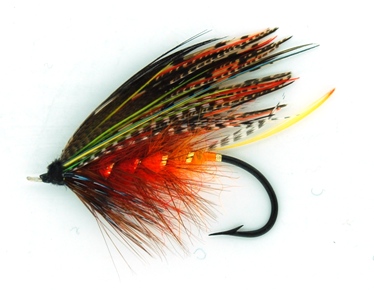
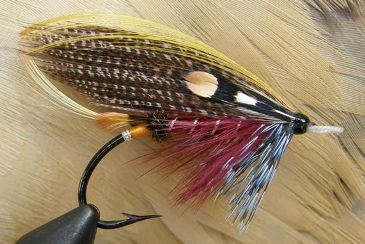
Tied by Bob Frandsen WM Tag: Silver thread and orange floss. Tail: A small topping and Indian crow (short) Butt: Bronze herl. Body: Rich claret floss. Tinsel: Narrow silver thread, 5 turns. Hackle: Claret to match body, all the way from turn of tinsel, nearest to butt. Wings: Bustard and Mallard mixed; topping all over. Shoulder: Sparse Jay hackle would round about. Cheeks. Jungle on either. Head: Black Sizes 5, 6, 7, and 8. Suits a dull day, a clear water, and under these conditions can also be used in the evening with success. Salmon, grilse, and sea trout alike rise to it freely. In this respect it is rather an exception. W.M. describes this fly as “one of our own patterns”.
The
A lovely little fly from Geert Werbrouck Kelson – The Salmon Fly, 1885 Tag: Silver twist. Tail: A topping. Butt: Black herl. Body: Dark blue silk. Ribs: Silver tinsel (oval). Throat: Gallina and teal. Wings: Tippet fibres; mallard and two narrow strips of summer duck above. A summer pattern on the Hardy – Salmon Fishing, 1907 Tag: Silver tinsel. Tail: A topping. Butt: Black herl. Body: Dark blue floss. Ribs: Silver tinsel. Throat: Guinea fowl and teal. Wings: Tippet strands; mallard and two narrow strips of summer duck. Head: Black.
The Clunie (or
Early on in the year 2011, I received the following email: "I have been fishing the Dee at Ballater for 40 years in May - and now have a week in September as well. Ian Murray lent me the fishing records for Monaltrie between the 2 world wars and I was impressed that the most succesful fly was the Clunie. I would like to try it again and contact you to ask if you know anyone who would be prepared to tie me 50 or so of various hook sizes. I cannot find a picture of the fly but you have a "recipe" for it on your website.
Any assistance would be greatly appreciated
Christopher Bateman" "THE CLUNY IS REBORN.
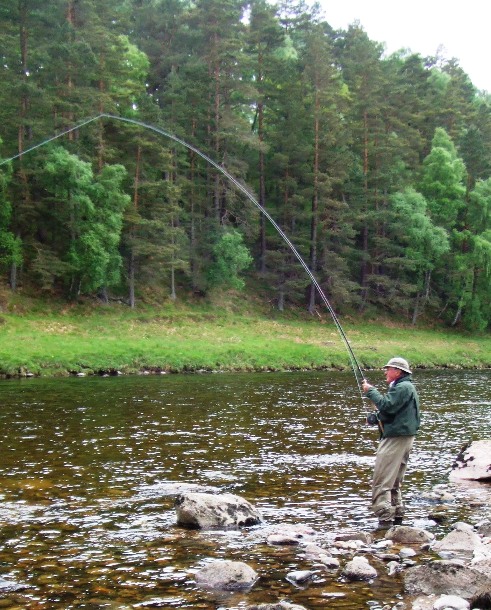
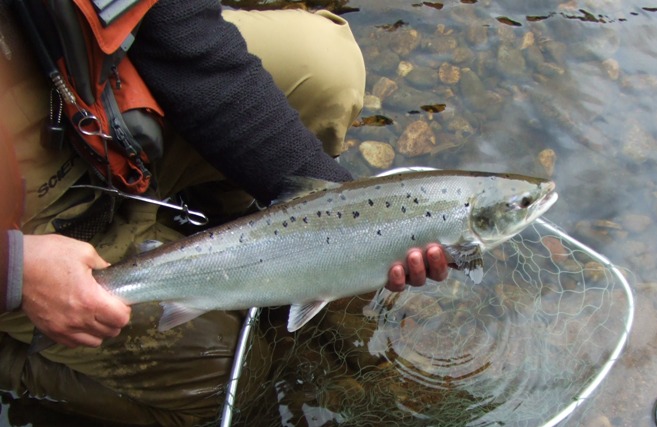
Philip tied lots for me and our party fished with them on Monaltrie last week, They work!!. Four out of our five fish were caught on Cluny's. The first was an 18 pounder to my rod. I couldn't get a photo because I was on my own and had to beach it etc and was too busy. I might have a photo of one of the subsequent caches - if I do I will send on.
You are quite right . Philip ties beautiful flies. Thank you so much for putting me in touch with him.
Monaltrie is having a good season but I doubt if they will reach a third of the catch in 1927 -- 563 fish. Those wrere the days.
All the best, CB"
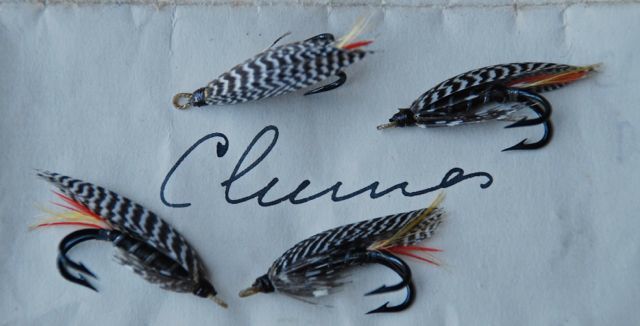
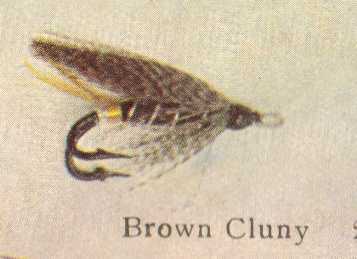
"I attach a picture of a Cluny. I will send pictures of the second fish I caught on a Cluny and of me playing it in a separate email. I have no newsworthy anecdotes to add except that I had 60 tied and I have given away so many that I am going to have to ask Philip G to tie some more. We will be testing them on Grilse in the autumn.
All the best CB"
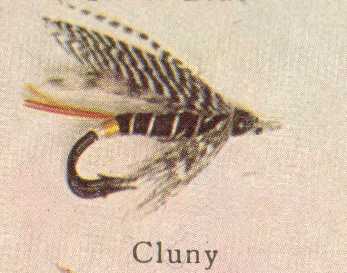
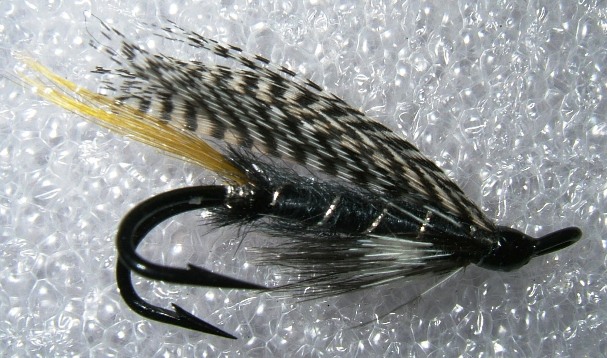
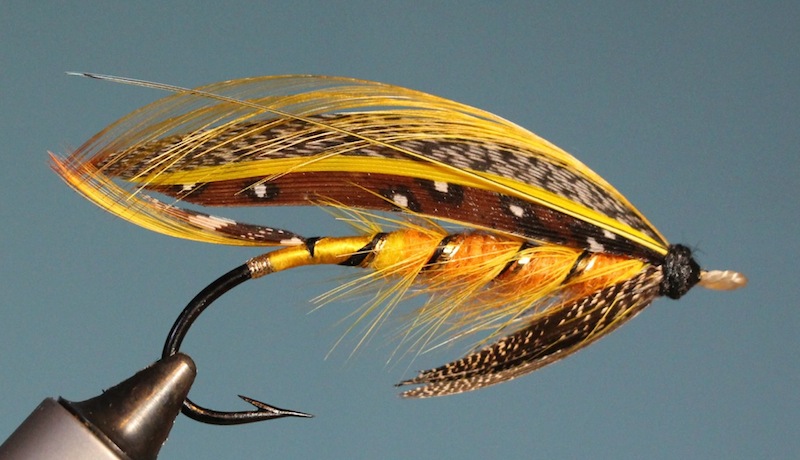
Tag: Silver twist. Tail: A small topping. Butt: One turn black herl. Body: Black silk floss. Ribbed: Silver tinsel, 5 turns. Wings: Double strips, distinctly marked teal. Hackle: Guinea fowl, only at shoulder. Limericks, 6 and 7, double irons.
Tag: Silver twist. Tail: A topping and scarlet ibis. Body: Black silk. Ribs: Silver tinsel (oval). Throat: Gallina. Wings: Teal.
This favourite summer pattern on the Dee is dressed on very small double hooks. Kelson attributes the pattern to William Garden.
Hardy – Salmon Fishing, 1907
Tag: Silver tinsel. Tail: A topping and ibis. Body: Black floss. Ribs: Silver tinsel. Throat: Guinea fowl. Wings: Teal. Head: Black.
Grey Clunie J.L. Dickie also mentions catching a fish on the Birkhall beat of the Dee in his book "Forty Years of Trout & Salmon Fishing" with a "Grey Clunie"
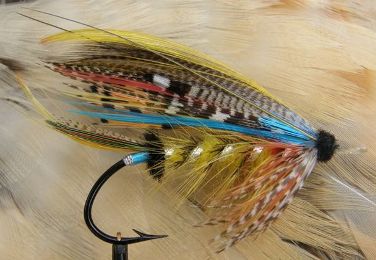
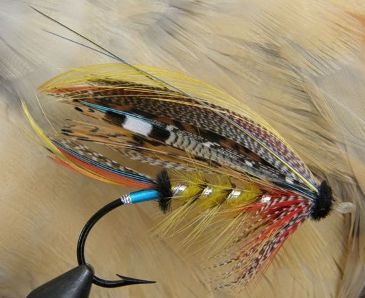
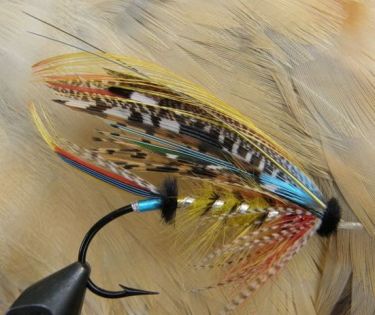
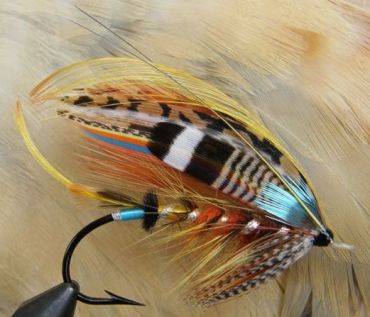
The Colonel (Modern)
Recently tied by Marc Le Blanc Kelson – The Salmon Fly, 1885 Tag: Gold twist and yellow silk. Tail: A topping. Body: Two turns of yellow silk, followed by yellow seal’s fur. Ribs: Black purse silk, gold lace, and silver tinsel (together). Hackle: A yellow hackle, from yellow silk. Throat: Light bustard. Wings: Strips of dark mottled turkey, golden pheasant tail, and bustard, swan dyed yellow, red, and blue; and a topping. Horns: Blue macaw. Head: Black wool. Hardy – Salmon Fishing, 1907 Tag: Gold tinsel and yellow silk. Tail: A topping. Body: Two turns of yellow silk, followed by yellow seal’s fur. Ribs: Black purse floss, gold lace, and silver tinsel. Hackle: Yellow hackle. Throat: Light bustard. Wings: Strips of dark mottled turkey, golden pheasant tail; bustard, yellow, red, and blue swan; and a topping. Horns: Blue macaw. Head: Black. Next Page
|
 |
 |
 |
 |
 |
 |
 |
 |
 |
 |
 |
 |